Departing from where it all started: Taichung Railway Station
Words and photos by Xie Wen Tai
Translated by S. Ying
In 1908, the final section of Taiwan's main north-south railway line was completed in Taichung. Since the first steam engine whistles echoed through its walls, the Taichung Railway Station has been a constant companion to this city from those early days right up to the modern, prosperous Taichung of today.
Over the past century, the rail station has not only served as a city symbol but has been witness to countless personal stories and a link between local culture, history and memories. One can hope that Taichung's new railway station will continue to be the pride of city residents in the century ahead.
Since the start of Japan's rule over Taiwan in 1895, that nation aimed to take full advantage of this island's unique geographical location and attributes in order to provide economic benefits and value to Japan. As a part of this effort to develop Taiwan's rich natural resources, an island-wide railway system was necessary.
Development of the rail system was divided into three construction phases in northern, central and southern Taiwan. Between 1900 to 1904, the northern and southern sections were completed while the central section was delayed and finally completed between 1905 to 1908. On April 20, 1908, the entire railway was connected--a landmark event that was celebrated on October 24 at Taichung Park. In fact, the park's well-known Lake Pavilion was built for this occasion and later became an enduring symbol of Taichung city.
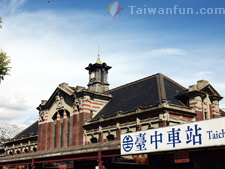 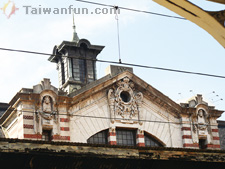
Right: Back pediment
First steps toward a modern Taichung
In 1905, the original Taichung Railway Station was only a simple Japanese-style wooden building. With the city's growth, a larger structure was clearly needed and in 1917 the distinctive brick building that we see today was constructed. The station location was also very important as it became the central focal point between the eastern and southern parts of the city.
Over the decades since then, it has seen a starting point for many journeys as well as a nostalgic sight for those coming home.
A classic style from abroad
Following Japan's Meiji Restoration period, British scholar Josiah Conder was a lecturer at Tokyo Imperial University, introducing Western architectural concepts and laying a foundation for Japan's modern architectural education. At this time, a number of Japanese architects also studied in the UK and returned to further promote modern architecture in their home county. Kingo Tatsuno was among this first generation of outstanding architects.
At the time, Japan deeply embraced Western Historical Style architecture, divided into European Classical Style and Victorian Style. The European style tended to be more solemn and followed traditional architectural structural grammar, while the Victorian Style used red brick and a more open style of architectural elements, leading Japanese to refer to this as the "Free Classical Style". Kingo Tatsuno was famed as a leader in this latter style; his horizontal band style is representative of his works and can be described as a creative poem within a world of traditional literature.
As the Japanese government continued to support architectural development in Taiwan, many Japanese architects and architectural school graduates began to participate in urban development projects, thereby creating a new modern architectural look for the island.
Taichung Railway Station was completed in 1917 by the Governor of Railway Bureau and its design was considered a masterpiece of Kingo Tatsuno, incorporating a Free Classical Style design that symbolized progress and vitality.
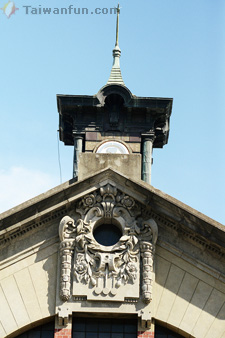  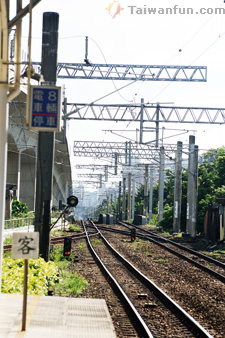
Left: The pediment on the front of the
Taichung Railway Station.
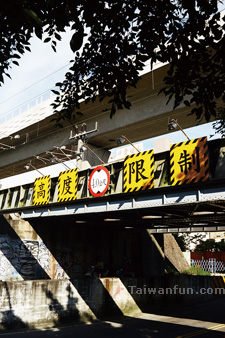
Medium: Pathway under railway
Right: The old railway station's future remains
uncertain.
Great achievements in architectural aesthetics
The station in its early days was an extremely functional brick building with a very simple design featuring a high ceiling and waiting areas on both sides. In the middle is a wooden corridor that connects the ticket counter in the back to the entrance and steel platform. The high ceilings form a center pediment and the three square windows on the wall make the lobby feel more bright and spacious. The waiting rooms on the sides are also brightened and enlarged by light coming through domed windows on four sides.
Taichung Railway Station is a red-brick structure but the bricks are not exposed, being covered with tiles, with the outer walls using a band-like design topped by a wooden roof.
The main rectangular structure has hip roof rafters designed on a traditional architectural foundation with rooftop and body creating an elegant visual effect through the use of a stucco detail, mimicking stone for the columns, beams, arches, and pediments. The handiwork of Kingo Tatsuno is also clearly evident in the horizontal bands design on the corner columns.
The center of the station has a hipped wooden tower-- designed with a half-circular arch representative of the late Renaissance era--and remains a symbol of Taichung City. The pediments on all four facades create a strong sense of strength and give the building a striking air with its beautiful front pediment design and sophisticated stucco detail on all sides adding elegance and sophistication.
As you closely examine the decorative details, you will find pineapples, pomegranates, wax apples, bananas and many local Taiwanese flowers and plants, all part of the architect's creativity and efforts to provide elements of surprise to visitors while embodying the Free Classical Style.
Another pair of rectangular pilasters in the lobby separate it from the waiting area. These columns are also specially decorated with tropical plants and flowers from abroad and are another elegant, artistic facet at this station.
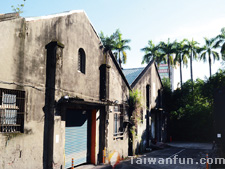 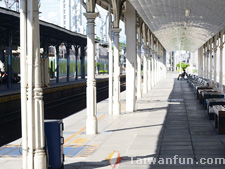
Left: Train station storage
Right: The station platform's steel columns
Transition of Railway culture: Past and future visions for Taichung
As an all-new station is being constructed, the Taichung Railway Station will take on a fresh role as a railway museum. On many levels, this landmark will remain important in the city's architectural, artistic and urban development history. For one, the railway system has been a key to Taichung's on-going urban development; without it, economic and cultural growth would have been severely stunted. The connection between the railway network and the livelihoods of local residents have been closely intertwined, weaving personal stories with the transportation of goods, students and families. Moreover, the railway has helped establish Taichung as a cultural city.
Today, fresh hopes for the century ahead await the new railway station, as Taichung moves forward from its earliest days with the Taichung Railway Station and continues into a brand-new era.
Nationally-designated heritage site (Class 2)-Taichung Railway Station
1, Taiwan Blvd, Sec 1, Central Dist (intersection of JianGuo Rd. and Taiwan Blvd.)
Year: Built in 1917 (Japanese Taisho era, 6th Year)
Designer: Taiwan Governor Railway Bureau
Architecture Specialty: Tatsuno Kingo style (Free Classical Style)
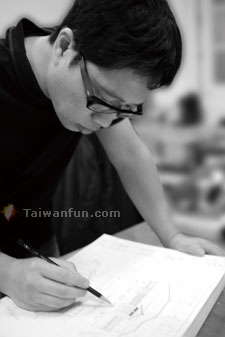 Writer's profile:Xie Wen Tai Writer's profile:Xie Wen Tai
A long-time resident of Taichung, this romantic architect believes that wonderful stories will emerge from beautifully-designed spaces. Although his foolish love for the old parts of Taichung compel him to do what others view as stupid, some of his silly deeds somehow have slowly become wonderful stories, one by one.
He holds a master's degree from the Department of Architecture at National Chengchi University, and now is a lecturer there in addition to Tunghai University and Chaoyang University of Technology's Department of Landscape and Urban Design. Mr. Xie has dedicated himself to projects related to community building, school landscape improvement, revival and preservation of cultural assets in the city, and renewal of city spaces.
|

 July 2015
