

|
New business ideas via the Economy of Cultural Creativity and Aesthetics
Culture is great business!
Words by Industrial Development & Investment Promotion
Committee of Taichung City
Translated by Naomi Lai
The cultural creativity industry is the future of global economic development, as it represents a nation's "soft power" and a new economic direction. According to surveys, the global productivity of the cultural creativity industry was approximately US$22 billion per day. In recent years, nations around the world have started to understand the business potential of this sector and embrace it as the right path toward further development.
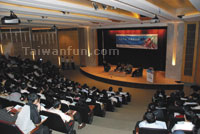
In hopes of providing Taichung businesses with an understanding of the unlimited potential of this new outlook, the Taichung Industrial Development and Investment Promotion Committee (IDIPC) held an "Economy of Cultural Creativity and Aesthetics" symposium at the Windsor Hotel Taichung on Oct. 15. Taichung Mayor Jason Hu, Vice Chairperson of the Feng Chia University Board of Trustees Mr. Cheng-Shu Gao, President of Rose House Tea House Tenghui Huang and CEO of Jimmy S.P.A. Yu-San Lee spoke at the event, triggering in-depth discussions about this industry among the central Taiwan participants. Approximately 300 people from the industrial, government and academic sectors attended.
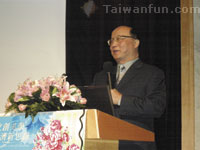
Mayor Hu opened the symposium with a speech, "Surprising the World with Culture and Creativity", and shared his hopes and visions for the city as the "HEART OF TAIWAN (HOT)" and a creative, cultured and economically-strong international metropolis. Through culture and creativity, he hopes to move Taichung into the international spotlight as a place with a high quality of life and growing industries. A good example of this internationalization is the project to construct the Metropolitan Opera House, which received bids from about 30 architects in 12 countries. This project not only drew world attention to Taichung but also has made the city the site of one of nine future world landmarks. In addition, international events held in Taichung, such as the Jazz Festival, Lantern Festival, Traditional Arts Festival and Pavarotti's farewell tour concert, all successfully attracted tens of thousands of international and local tourists. Exhibitions and events fusing Eastern and Western, modern and classical influences helped earn Taichung the title as World Best Cultural and Art City at the 2007 World Leadership Forum Awards, affirming the city's direction and achievements in this area.
Cheng-Shu Gao from Feng Chia University spoke about the importance of understanding the cultural creativity industry's difficulties and limitations, and how to find opportunities in it. This industry consists of culture, the creator, creativity, creative products and commercial products. Culture is a habit of life and creativity arises from stepping out of these habits. The key element in the process is the creator. If the creator cannot produce commercial products or create economic value, then his creativity will cease to progress. The rise and fall of the cultural creativity industry depends on every individual in society. If we are willing to accept and understand creative, aesthetic living styles and ideas, then this industry will have a chance to flourish with us.
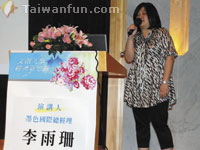
Tenghui Huang of Rose House Tea House shared his own experiences. Inspired by his love for roses and the book, "The Little Prince", he built his own culturally creative business focusing on the English afternoon tea--the unique Rose House Tea House. Using this as a home base, he then developed various side products along the same theme, profiting from great economic gains and public acceptance. Concluding the symposium was a talk by Yu-San Lee of Jimmy S.P.A. on the "Neverending Story: Jimmy's brand management and creativity". Jimmy S.P.A. was created in 2000 to manage and market the "Jimmy" brand, combining Jimmy's illustrations with different businesses to develop side products and offer these to satisfied customers via various venues. Jimmy became more than just illustrated books, but an attitude towards life, and capturing this key value moved the brand off the printed page. Finding a balance between depth and width, and art and business, has always been the main focus of Jimmy S.P.A., as it merges cultural content with commercial creativity. Starting with the creation of cultural content and moving on to product manufacturing and distribution, and cooperation with other business clearly illustrates the value chain of the culture creativity industry here.
The cultural creativity industry has been listed as an important development direction for the nation since 2002. Cities are investing tremendous effort into developing their own unique flavors within this industry. With its progressive development and promotions, Taichung now stands out as one of the most promising cities in this wave of development. It is our strong belief that through these interactive events, the government, academic and business sectors will gain a better understanding of how to find new opportunities in this area.
|

 November 2009

