|
Greater Taipei was once home to Pingpu (meaning plains-dwelling) Aborigines. Although now marked by towering skyscrapers and modern conveniences, this area has not forgotten its indigenous roots. As an example, in 1996, the street leading to the Presidential Building was named Ketagalan Boulevard, to commemorate a Pingpu tribe that inhabited parts of what are today Danshui and Keelung. Thus, it should come as no surprise that Greater Taipei possesses a number of opportunities for learning about Taiwan's indigenous culture.
What to see
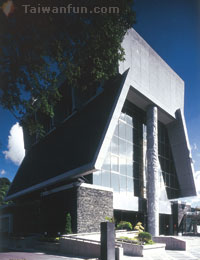
In November of 2002, the Taipei City Government opened the Ketagalan Cultural Center in the Beitou area in a 10-story building that once housed military police units. It now features exhibition areas, not only on the Ketagalan tribe, but on all of Taiwan's indigenous tribes. There are often traditional song and dance performances and other activities open to the public. This center also includes research facilities, a library and conference rooms. On the top floors, office space has been allocated to indigenous non-profit and non-governmental organizations. Thus, the purpose of this facility is to serve indigenous groups in Taipei, as well as to provide a place for learning about Taiwan's indigenous culture.
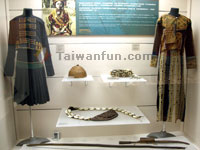
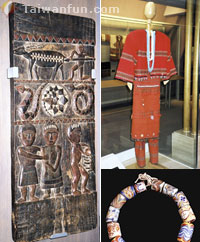
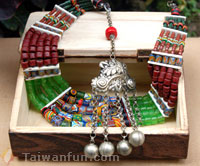
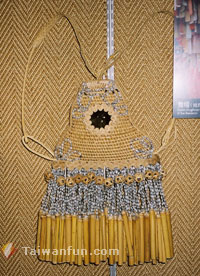
In Shilin District, across the road from the National Palace Museum, is the Shung Ye Museum of Formosan Aborigines. Recently a joint ticket system was introduced to allow visitors to take in both museums at a reduced cost. The Shung Ye Museum opened in 1994 as Taiwan's only private museum dedicated to its native peoples. There are four floors of exhibition areas featuring hard-to-find cultural artifacts including traditional arts, such as pottery, wood carving, stone carving and glazed beads, as well as clothing, musical instruments, weapons and items used during special ceremonies. Some of the exhibit areas feature screens on which documentaries that were filmed in the villages are shown, while a theater plays animated films that introduce a variety of tribal legends. Most of the exhibitions and films are in Chinese and English. The museum offers an audio tour in Chinese, English and Japanese, and English-speaking tour guides are available with advance reservation.
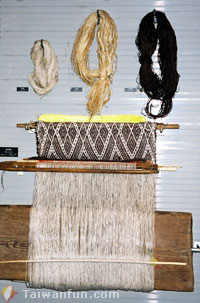
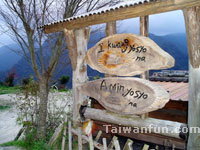
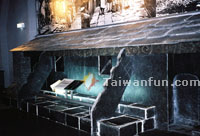
The mountainous Wulai Township of Taipei County is home to the indigenous Atayal tribe. Just as is the case for many of Taiwan's indigenous villages, Wulai is surrounded in natural beauty. The Nanshi and Beishi rivers run through this area and these are both popular destinations for river tracers. But, Wulai is probably best known for its natural hot springs and numerous hot springs resorts. Another of the area's attractions is Wulai Street. On this street is the Wulai Atayal Museum, which is easy to recognize by the stone carving of an Atayal warrior over the entrance. This museum features exhibitions on the history and culture of the Atayal tribe, including the traditions of facial tattooing and weaving. Although all of the tribes practiced weaving, the women of the Atayal were especially adept at this art form, creating complex patterns using a very simple loom. Only women who were accomplished weavers were able to have their faces tattooed, which was a sign of entering adulthood and eligibility for marriage. A male had to prove himself on the battlefield to receive this honor. Although facial tattooing is no longer practiced, there are photographs showing what these tattoos looked like. In addition, there are exhibitions detailing the traditional dwellings of the tribe, as well as the local ecology.
Where to eat
In March of 2006, at a ceremony to mark the 10th anniversary of the Council of Indigenous Peoples, the central government authority tasked with overseeing all indigenous affairs, then Taipei Mayor Ma Ying-jeou noted that the number of indigenous people living in the city had more than doubled between 1996 and 2006, from 4,500 to 11,000.
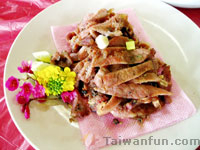
With a steady influx of indigenous people, one would think that there would be at least a few indigenous cuisine restaurants in Taipei City. But, alas, nothing could be further from the truth. Over the years, there have been restaurants that have come and gone but not many have stood the test of time. One that has is Driftwood, located off of Section 3 of Roosevelt Road, near National Taiwan University. Although its menu does feature indigenous dishes such as grilled wild boar and betel nut flower salad, its attractions lie in its indigenous-themed decor and live music performances, rather than in its food.
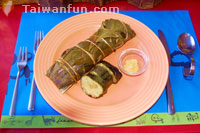
Wulai Street is the place to go if you are seeking great indigenous cuisine in Greater Taipei. One of my favorite indigenous cuisine restaurants in all of Taiwan is located on this street. It is called Taiya Po-Po, which translates to "Atayal mother-in-law". This restaurant serves a range of dishes, from the popular seasoned rice steamed in bamboo tubes (竹筒飯) and local freshwater fish to the very authentic, but not necessarily very tasty, mixture of raw pork, rice and salt that has been allowed to ferment for two weeks (山地醃肉). Thus, there is something on the menu for every level of food adventurer. While I am there, I also like to pick up a couple of bottles of millet liquor (小米酒). This is a sweet and sour alcohol fermented from, as the name suggests, millet-once the traditional staple grain of Taiwan's indigenous peoples. For dessert, head next door to Taiya Shi-fu (Atayal daughter-in-law) and purchase some fresh "moichi"-sticky rice or millet balls filled with peanut powder, red bean paste or sesame paste.
Where to shop
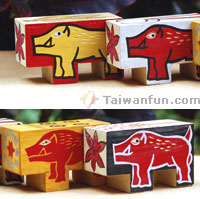
Along Wulai Street are a number of shops selling indigenous-themed souvenirs and handicrafts. The Shung Ye Museum and Ketagalan Cultural Center offer opportunities for shopping for indigenous-made items, such as those produced by Yuli Taki.
Yuli Taki, a member of the Truku (also known as the Taroko) tribe, has been featured in numerous media reports, as she is the creator of Taiwan's first successful indigenous brand, named after herself. This designer has incorporated traditional woven patterns of the Truku, Atayal and Amis tribes into handbags and accessories such as wallets, keychain holders and name card holders. She works out of her store located along MinSheng East Road, where she designs new products and creates a series of hand-painted stone pendants, suede wallets and other items. If you would like to visit this store, it is best to call ahead.
There is one shop where you can purchase indigenous handicrafts, such as wood carvings, jewelry, leather items, woven items and ceramic ware, 24 hours a day, seven days a week. This is an online store (www.tribe-asia.com) that is owned and operated by this author. It was launched in 2006 to serve as a platform for Taiwan's indigenous artisans to access international markets. In addition to shopping, there is an information area with English-language introductions to Taiwan's indigenous tribes, as well as articles on indigenous-related issues, exhibitions and activities.
As part of my effort to collect products and information for this site, I have been fortunate enough to travel to a number of indigenous villages and to experience indigenous culture firsthand. If you are looking to do the same, Tribe-Asia.com is currently developing itineraries for international travelers into indigenous villages. Its first is a two-day tour to Wangsiang Village, a Bunun village located in central Taiwan's Nantou County.
From the above sampling, it is clear that there are many exciting ways to experience Taiwan's indigenous culture and that your next adventure could be just an MRT or bus ride away.
|

|
Ketagalan Cultural Center
3-1, ZhongShan Rd, Beitou District
Tel: (02) 2759-5565
Website: www.ketagalan.taipei.gov.tw
Getting There: Take the MRT to the Xinbeitou Station. The center is a few minutes walk from the station.
Shung Ye Museum of Formosan Aborigines
282, ZhiShan Rd, Sec 2
Tel: (02) 2841-2611
Website: www.museum.org.tw
Getting There: From the MRT Shilin Station take one of the following buses: R30 (Red 30), 255, 304, Minibus 18, Minibus 19, Culture Bus 101
Yuli Taki
272, MinSheng E Rd, Sec 5
Tel: (02) 2761-7815
Taiya Po-Po Restaurant
14, Wulai Street, Wulai Village, Wulai Township, Taipei County
Tel: (02) 2661-6371
Wulai Atayal Museum
12, Wulai Street, Wulai Village, Wulai Township, Taipei County
Tel: (02) 2661-8162; (02) 2661-7819
Website: www.atayal.tpc.gov.tw
Getting There: From the MRT Xindian Station or Exit 3 of the MRT NTU Hospital Station, take a Sindian Bus to Wulai. It is best to have your own transportation to see the most of Wulai. By car, from National Freeway 3, exit at the Ankeng or Sindian interchange and connect to Beiyi Road, then turn onto Highway 9A to reach Wulai.
Tribe Asia www.tribe-asia.com
Tribe-Asia is working to towards helping indigenous artists gain fair prices for their works, to allow them to survive on their talent.
Tel: 0911-098-148 or 0923-151-965
E-mail: info@tribe-asia.com
|

 March 2008
