| Taipei's
hot springs fever warms things up
By Shanzi Chen
Translated by Ann Lee
Despite the effects of global
warming, which gave the island a nice warm winter,
the early part of spring in northern Taiwan
still brought some overcast, rainy weather.
With temperatures dropping abruptly, we can
still expect some cold fronts to pass through
in April. All that wetness in the air helps
guarantee that there will be plenty of eager
visitors arriving from around the island to
join the hot springs fever, and experience that
instant feeling of coziness with friends and
family.
Among all the spots you get
to choose from in the Beitou hot springs area,
New Beitou and Tienmu XingYi Road are the easiest
locations to reach via public transport. All
you have to do is take the MRT, followed by
a bus ride and you're there. For those who don't
feel the urge to drive or do not own a car,
this is a convenient way to travel.
New
Beitou Hot Springs
The name Beitou originated from the Patauw language,
which was spoken by the people of the Pingpu
Aborigine tribe. This name directly translates
into "witchcraft" in Patauw, because
the steam and vapor that rose from the hot springs
valleys resembled the white smoke associated
with magic and witchcraft. The water of hot
springs in New Beitou is naturally heated from
underground, and consists of white and green
sulphur. The green sulphur comes from underground
and the white sulphur from the opening of the
hot springs. With the passage of time, the Minnan
dialect of the Han people resulted in the name
"Bahtou" evolving into "Beitou".
Beitou's hot springs business
has over a century of history, the longest and
oldest hot springs destination in the greater
Taipei area. The construction of the MRT and
redevelopment plans related to tourism promotion
led local residents to rename the area "New
Beitou" to make a break with the old, previous
image and environment. Taipei's government and
businesses have cooperated to integrate historical
and cultural sites and unique local cuisine
as part of an effort to promote the enjoyment
of a new, healthy spa experience.
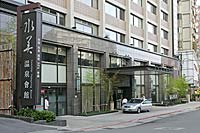
If you're looking for a more
elegant, romantic spot to enjoy hot springs,
there are a few high-end, exquisite resorts
to choose from in the New Beitou area. One worth
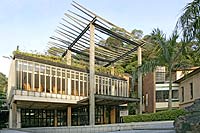
mentioning is the Spring City Resort, which
was an early pioneer for creating a five-star
hotel environment for a hot springs. Others
include the Pacific Wellness Spa & Club
and the recent addition Sweet Me Hot Springs
Resort. If you are interested in a more private
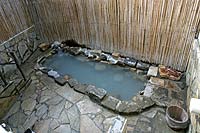
experience, you have the option of Japanese-style
hot springs villas, which allow you to enjoy
natural landscapes in the privacy of your own
outdoor spa area. The Asia Pacific Resort is
an excellent choice for this.
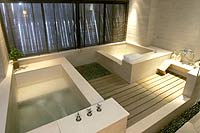
All spa resorts provide a complete
itinerary and information for customers. This
includes the different functions of the spa
pools, along with plenty of delicious dishes
and medicinal cuisine. This trend has become
very popular in Taiwan because people believe
they can achieve a mind-body balance through
relaxation and by spending time at the spa.
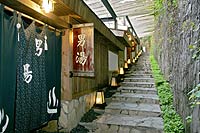
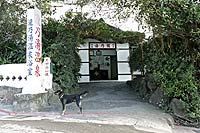
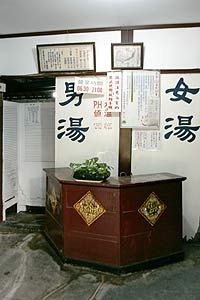
If you want to experience old-style
hot springs bathhouses, it's a good idea to
visit the venerable Long Nice Hot Spring. During
World War Two, Taiwan-based Japanese soldiers
gathered here to ease their wounds, and the
building exterior has a strong Japanese flavor
to it. This Japanese bathhouse separates the
genders and tends to attract senior citizens
more than other places. If you don't mind the
"simple and humble" decor, this place
is definitely worth visiting.
Next to the Beitou Hot Springs
Park is a public outdoor bathing pool for men,
women and children of all ages. Bathing suits
must be worn before entering the pool. Beitou
Creek serves as the center point of this pool,
and five different "longs" (bathing
pools) existed during the Japan colonial era.
Currently, there are six bathing pools in the
Beitou Hot Springs Park. Ticket prices vary
between weekdays (NT$20) and weekends (NT$40).
The pools have been set off from the bustling
streets, so that visitors can enjoy surrounding
themselves with big ancient trees and natural
scenery. This is definitely an adventure as
you can always hear the laughter of other spring-goers
and experience the joy of bathing in a natural
creek.
Apart from its hot spring culture,
the art and history of New Beitou is found on
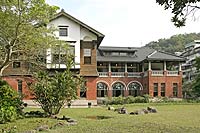
almost every corner. Pay a visit to the grade-three
Beitou Cultural Relics Museum, or the Ketagalan
Cultural Consulate if you are interested in
gaining a deeper knowledge about New Beitou.
The other option is to sign up a half-day or
full-day tour with the Taipei Hot Springs Association.
Having a tour guide lead you throughout the
day can provide a perfect, sentimental and relaxing
hot springs journey through the area.
Transportation:
New Beitou: Take MRT to Beitou, transfer to
New Beitou line.
Buses 223, 216, 218, 230, 266 get off at New
Beitou.
Hot Springs Shuttle (Small 25) goes from MRT
Beitou Station to Beitou Cultural Relics Museum.
You can get off anytime and anywhere when you
get to the mountain region routes.
Tienmu
XingYi Road
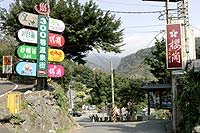
Hot springs in Tienmu originate in LongFong
Valley. When spring waters reveal a beige color,
this is referred to as a white mineral springs.
Tienmu's hot springs district is located between
Dun Xu High School and Tienmu Park. The natural
heat from underground mostly gathers in the
valleys on the east side of XingYi Road. Several
years ago, when the Beitou hot springs craze
started fading, residents began opening Taiwan
indigenous chicken restaurants on this street.
Going to SaMaoShan for Taiwan indigenous chicken
and a hot springs soak became a popular trend
for many people at the time. A couple of years
later; as consumers began moving upscale; the
other large-scale premium spa restaurants were
established. These new high-grade spa restaurants
took over the less-than-fancy restaurants, providing
today's better-known image of the SaMaoShan
Hot Springs District.
Geographically, SaMaoShan lies
between YangMingShan and Shilin District. Tourists
either come from the top of the hill, or often
go for the spa and then dine before heading
to the night market. This location is so convenient
that it has become a very popular get-together
spot where friends and family spend weekends
and holidays.
The spa restaurants here are of an international
caliber and include a variety of ethnic cuisine
from Japan, Europe, Southeast Asia and elsewhere.
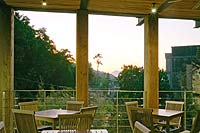
The atmosphere and decorations in these establishments
are both intriguing and unique but, whatever
the cuisine may be, owners make the fullest
use natural decor and landscapes, allowing customers
to fully enjoy the scenic hillside views while
dining or relaxing in the springs. Cuisine from
around the world is a main attraction for all
the spa restaurants in SaMaoShan and prices
are generally very reasonable, too. Combining
a meal and spa starts from NT$300 to NT$400
per person in most places. However, if you only
want to enjoy the spa services, it will cost
you approximately NT$200 and up. During slower
hours, some restaurants charge only NT$100 for
public pools. Being able to enjoy great spa
facilities at such affordable prices is the
main reason that SaMaoShan Hot Springs District
is so popular with tourists.
Transportation:
Tienmu XingYi Road: You can find spa restaurants
at the first stop. However, you are likely to
find more choices at the third stop.
MRT
to buses:
(1) MRT ZhiShan Station--bus 508 or 536
(2) MRT ShiLin Station--bus 612 or 216
(3) MRT ShiPai Station--bus 535 or 216
Tips
for hot springs enjoyment
-It is highly recommended that you read through
the warning notices before entering a pool.
-While sitting in a pool, it is best to stay
hydrated with water or sports drink, while avoid
the consumption of alcohol.
-Those who have sensitive skin or a history
of skin problems should consult their doctor
about the type of spring water suitable for
their skin type.
-Hot springs water should not be overheated.
Before entering a spa pool, always shower, then
splash some spring water onto the body. This
will help your body adjust to the temperature
of the hot springs water.
-Spring water has a lot of
minerals and metals. Therefore, it is not recommended
that you wash your hair with it. Wash your hair
after you leave the pool with clean water, then
dry it immediately. It is a good idea to dry
one's hair right after washing, to avoid catching
a cold.
-Many hot springs visitors
enjoy jumping between hot and cold water, which
some believe promotes weight loss. However,
if done incorrectly, this can also be risky,
as sudden temperature changes can put a lot
of stress on your cardiovascular system. The
proper way to is to ensure that the difference
between the water temperatures is 20 degrees
Celsius. Spend 10 minutes in the hot springs
pool before rinsing with cooler water, starting
with the feet and moving up towards the heart.
Be sure not to jump directly from a hot pool
into a cold-water pool.
-On colder days, dry your body
with towels after being in the hot pool. Wrap
yourself up in a bath towel and rest for a while.
This is a good time to relax your muscles through
simple yoga moves or massage. Try to work up
a bit of sweat to radiate heat inside your body.
At this time, slowly get dressed, avoiding putting
all your clothing on too quickly. |