Enjoying a classical exploration of southern
Taichung: Ataabu
Indulging a passion for culture
Sponsored by Hao Hsi Words by Lin De-chun
Translated by Anna Yang
Photography by Teng Hui-En
Located in southern Taichung City, Wufeng district is a big cluster of cultural institutions--including the Wufeng Market, Lin Family Mansion, historic provincial assembly buildings, National Taiwan Symphony Orchestra, Asia Museum of Modern Art, and Wufeng Story House--that all make this a a very worthwhile destination for a day trip.
Some friends may confuse Wufeng with Wushe, or not have any idea where Wufeng is, not realizing it is in Taichung. That leads to comments like "When I'm in central Taiwan, I will visit you in Wufeng in Nantou!" At the same time, many local residents of downtown Taichung may be under the impression that Wufeng is too far away to visit.
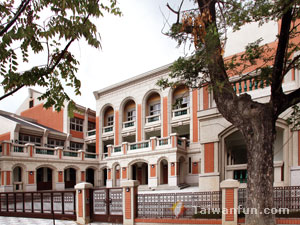
Lin Lan-sheng Golden Age Academy offers a warm and welcoming ambiance on its campus.
Cultural buildings on charming LanSheng Street
However, Wufeng is not as far as we may think. It takes roughly 40 minutes to get to the Memorial Park of the Taiwan Provincial Assembly from Taichung Railway Station via Taichung Bus No. 100 and the No. 3 Freeway's Wufeng exit will also take you there. Other direct routes from downtown Taichung include GuoGuang, ZhongXing and ZhongZheng roads.
With the consolidation of a Greater Taichung metropolis, Dali, Wufeng, Taiping and Wuri have become southern rump of the city south of the "Tun" districts but have their own cultural centers. Embarking from National Chung Hsing University on your way to central Wufeng, you have the opportunity to visit Daliyi Old Street and Taiwan Printing Discovery Center, and enjoy some Chaohu Taro Ice. Continuing deeper into this southernmost area of Taichung, you will encounter the rice paddy-surrounded culturally-rich area that was once known as Ataabu township before the Wufeng name was used.
If you get off at the Provincial Assembly bus stop and head onto LanSheng Street, you can visit the recommended traveler-friendly, independent bookstore Bear+Cat+Book+Coffee. I gained a better understanding of this historic street and its interesting stories after a long talk with local cultural office worker Ho Chia-sho. For example, Lin Lan-sheng was the fifth son of the Lin Family and, when he died at an early age, his mother donated half of his property to establish the Lansheng Charity which later became the Lansheng Renai Home. All charity funding raised here supported orphans attending its nursery school and needy senior citizens. However, this charitable association closed due to an earthquake disaster and other personal factors, leaving the Lansheng Renai Home in ruins.
Several buildings on this street collapsed during the 921 earthquake in 1999. Reconstruction in 2004 led to the completion of three co-op buildings and rebuilt Lansheng nursery on the former nursery site (now the Lin Lan-sheng Golden Age Academy). Presenting a warm red brick and ivory-colored facade, these pleasant-looking structures and the atmosphere they create blend perfectly into this peaceful alleyway.
Wufeng Story House and its neighbor, National Taiwan Symphony Orchestra
Right in front of LanSheng Street is the greenery-surrounded Taiwan Provincial Assembly and its memorial park, a great place for leisurely walks and ecological education. At the end of a palm-lined boulevard, you will come to National Taiwan Provincial Consultative Museum. Right behind this magnificent building is a local farm setting and continuing along a walking path will bring you to the ruined Wanfo Temple, still standing after the earthquake and now being rebuilt by devout worshipers.
Regular visitors to the Taiwan Provincial Assembly may have no knowledge of its cultural value. This building has been a witness to both World War II and local governmental development. Its Council Hall once served as a resting place during the assembly meetings and is today a Taichung landmark. Inside the Provincial Assembly, Yilu Restaurant is operated by the Farmers Association's Tien Mama culinary class and offers a variety of cuisine prepared with fresh local ingredients such as mushrooms and fruit. An off-the-menu treat here is Mixed Noodles, which originated as a reasonably-priced meal for soldiers serving in the Provincial Assembly. Today, its availability depends on how busy the chef happens to be.
Chaoqing Memorial Hall is right next to the Council Hall and is named after the first Provincial Assembly speaker, Huang Chao-qing. The lobby exhibit introduces Founder of the Council Lin Hsien-tang and several political activities he was involved with during the Japanese colonial period. Directly opposite Chaoqing Memorial Hall is also the elegant-looking Assembly Affairs Museum. The existence of all these historic buildings has made this a valuable place to visit.
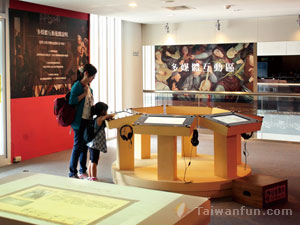 
Left: Musical instruments displayed at "Classic Delight" serve an educational
purpose and the facilities and environment here are family-friendly.
Right: Flying Goblet Drunken Moon Pavilion is located above Five-Cassia Tower
and Lychee Isle.
As you leave the Taiwan Provincial Assembly, the 120-year-old Wufeng Elementary School is on the right. Walk another five minutes and you'll see the National Taiwan Symphony Orchestra. The orchestra's ''Classic Delight" is a truly unique music-themed hotel, with musical instruments on display in the lobby. Visitors can also have fun trying their hand at conducting via interactive software and there are family-friendly facilities like a media library with abundant resources on the second floor.
Lin Family Mansion and neighboring traditional market
If you continue walking in the direction of Dali district from the orchestra for 10 minutes, Wufeng Lin Family Mansion can be seen. The mansion is divided into two sections--the Upper (where Laiyuan is located) and Lower houses. The Palace Guard at the Lower House has a Hall of Large Flowers, which includes an exquisite theatrical stage with outdoor seating where several classical theater groups have performed. Laiyuan (Upper House) is located in Mingtai High School, and the Five-Cassia Tower is where the Oak Poetry Society was founded and served as its gathering place. Several other scenic sites, including Flying Goblet Drunken Moon Pavilion, Lychee Isle, Pool of Small Habits, and Iron Cannon Tablet, are nearby. Many people like to pay a visit to this garden-like high school in remembrance of scholars from the Japanese colonial era.
If you're an early riser, it is recommended that you take a walk to the sizable Wufeng traditional market, but be prepared for the crowds here on weekends. Besides enjoying bloggers' highly-recommended "bawanpo" (meatball vendor), a myriad of nostalgic delicacies here shouldn't be missed. A cup of soy milk and deep-fried dough stick can provide a simple, yet satisfying, start to a new day.
Just beneath MinSheng Road--which separates the market and Lin Family Mansion--is the famous Ataabu Ditch. As you walk along the road, the gray building next to Wufeng District Office is the Senior Citizens Education Academy (once the Provincial Educational Hall). As you walk through its indoor hallway, century-old trees encircled by red ribbons can be viewed in the middle of the garden. The academy's Yiwen Library was named after Lin Yi-wen, from a wealthy Wufeng clan. If you're interested in Lin Family history, you are welcome to visit this distinguished township library, the first ever built in Taiwan, where literature in Vietnamese, Indonesian and Thai languages can also be found.
An invitation to learn more about 'Taiwan's No. 1 Village'
As more museums and cultural institutions are developed in this area, some creative eateries and shops have also progressively opened as well. However, many visitors also seek out authentic Wufeng eateries such as Shu Ren Road Old Lamb Shop and Linsen Road Old Flavored Beef Noodles.
Riding the bus two stops from the Provincial Assembly toward Caotun will bring one to Guangfu Village. This cultural and scenic spot has been labeled the "Number One Village in Taiwan" and you can wander around its old houses and trees while also appreciating cultural and creative attractions at the hip "Blessing Chair Public Art Community" and "Love Reading" shops.
North of Guangfu Village is the 921 Earthquake Museum of Taiwan, which preserves the remains of several Guangfu Junior High School buildings that collapsed in the 1999 quake, even as Fuxing Elementary School directly opposite was completely unharmed. This drastic contrast led local residents to nickname the street separating these schools the "yin/yang road".
If you don't stop at Guangfu Village, the bus will take you toward Asia University on LiuFeng Road where the on-campus Asia Museum of Modern Art stands as renowned Japanese architect Andou Tadao's only Taiwan masterpiece. Its simple concrete walls and geometrical design offer ideal photo-shooting spots and visitors may also appreciate "The Thinker" sculpture and enjoy a peaceful moment on its lawns.
Local style inspires Wufeng Story House
If you drive along ZhongZheng Road toward the Taiwan Agricultural Research Institute, you will come to the Wufeng Farmers Association Winery and, right next door, the Wufeng Story House, which has been renovated and opened to the public. This new cultural destination used to be a clinic for the famous Dr. Lin Peng-fei and was considered one of the most stylish houses in the 1950s. After the doctor retired years ago, the house remained empty until architect Sun Chong-jei and Asia University professors Liao Shu-juen and Lin Si-chuan made plans to renovate the structure with their students. The local farmers association eventually decided to purchase this property and turned it into a base for developing healthy agricultural products. The story house displays exhibitions about Dr. Lin and, in another section, food and agriculture that help educate visitors about proper and healthy ways to eat.
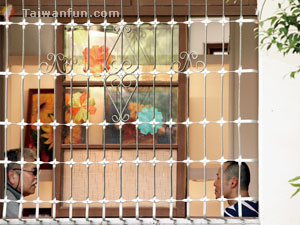 
Left: Interactions between the old and new are found at Guangfu Village's
youthful cultural shop.
Right: Wufeng Story House comes alive, as teachers and students receive credit for
their contributions to "Wufeng Style".
All of these scenic spots are closely surrounded by rice fields. As you visit Wufeng's museums and other attractions, don't forget to take your time and enjoy the scenery and stories here. The beautiful culture that awaits discovery along country roads promises to provide you with an abundance of treasured memories.
|

 December 2016
