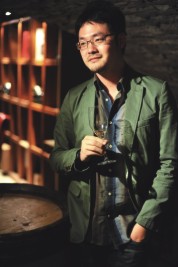
Wine enjoyment in the 21st century is a time to use all of your senses. While in the past, people believed that wines were most closely experienced via the mouth and taste, contemporary western wine researchers discovered that the best enjoyment during a wine-tasting experience is derived from its aromas, which accounted for 70 to 80 percent of one's perception of the wine. Wine enjoyment in the 21st century is a time to use all of your senses. While in the past, people believed that wines were most closely experienced via the mouth and taste, contemporary western wine researchers discovered that the best enjoyment during a wine-tasting experience is derived from its aromas, which accounted for 70 to 80 percent of one's perception of the wine.
Wine aromas can be affected by the curve, height, width and thickness of a wineglass. Moreover, any flaw in the glass can also negatively affect the taste. Thus, the wineglass has evolved in function to integrate the human senses with scientific inputs, also allowing the wine taster to balance the enjoyment of scents and flavors.
As noted by Mr. Bernard Pivot in his book, "Dictionnaire amoureux du Vin", "Grapevine cultivation is also the spirit of culture", clearly stating that wine tasting is not limited to the senses, but also involves the spirit and mindset of the taster.
When wine steward serves wine in a legitimate French restaurant, the way that a wineglass is held and the glass quality already are affecting the wine tasting experience. This is similar to the way that diners at many Michelin-starred restaurants aren't only experiencing the cuisine itself, but are also concerned with the quality and value of tableware they are using. The messages sent by visual perception and the brain itself can actually influence the taster in terms of psychological sensations. The book "Le gout du vin" points out, "Any tasting and smelling experience is sensory, but every individual develops different types of enjoyment."
Therefore, the pleasure of wine tasting is mainly about the senses and influenced by personal preferences. Sensory wine tasting means experiencing the satisfying and delightful sensations of sampling wine, something to be appreciated at leisure. |

 March 2016