Exploring Guguan beyond the hot springs
Words and photos by Shi Yong-feng
Translated by Angela Cheng
In order to care for local development, in 2013 Taipower Company decided to transform the Dajia River Hydroelectric plant into an eco-power plant, so it first renovated the environment around Ma'an Dam and merged the Forestry Bureau and Taichung Irrigation Association, combining Guguan's hot springs industry, Ba xian Mountain, Ma'an Dam and Bai-leng Irrigation system to create an easy and easily-accessible family-friendly destination as well as a leisurely-paced eco-tour that would be inspiring to both the heart and mind.
The enormous devastation caused by 1999's 921 Earthquake left the Central Cross-Island Highway badly damaged, which in turn led to a decision by the Taichung City Government to cut public access to this mountain area indefinitely in the hopes that one day it would be a showcase for natural alpine beauty. While this closure, lasting over a decade to date, has drastically reduced business activity in this area and had a detrimental effect on the local economy, it has also had the tremendous benefit of helping to restore the natural ecology. The once-degraded scenery along DongGuan Road has thus been replaced by lush expanses of green and a breathtaking natural environment.
Ruan-bi Keng entertainment agricultural area
(04) 2585-4832
QingFu St, Qingfu Village, Dongshi District
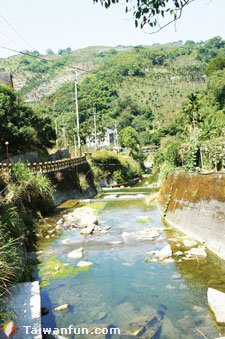
The growing number of people who enjoy firefly-watching, combined with a pristine, pollution-free environment, has made the Ruan-bi Keng entertainment agriculture area here well-known for its firefly re-population success, and popular each year among visitors in April and May. In order to protect the natural setting and resources on the mountain here, the soft pond has its own ecology conservation patrol team and you will see 'no fishing' signs posted everywhere. This means that you'll also see Opsariichthys fish, Taiwan ku fish and freshwater minnows everywhere in roadside streams.
The site of a felled hundred-year-old cinnamon tree has been replaced by fragrant magnolia flowers here. Sitting on a slate slab at the foot of a cold springs, enjoying good times and conversations with friends, inhaling flower fragrances, savoring some locally-grown persimmons and mandarin oranges, watching fish in the river, egrets and swallowtail butterflies, and listening to the sound of water from upstream are all sources of tremendous pleasure.
Dajia River hydroelectric plant
98-1, DongGuan Rd, Sec 2, Tian lun Village, Heping District
(04) 2594-1574
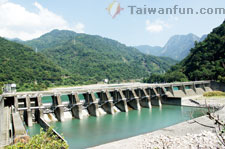
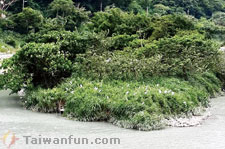
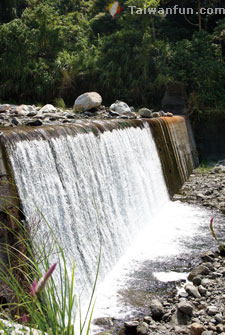
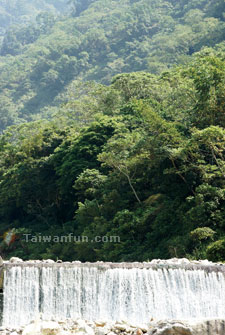
To prevent any harmful impact on fish and the Dajia River ecology, Dajia River's Ma'an Dam was the first dam in Taiwan built with a fishway (fish ladder). Standing at the top of the dam, one can watch schools of fish swimming upstream via this fishway while also viewing an egret island naturally formed by the dam. This island is undisturbed by humans, so it attracts a variety of birds, the majority being egrets, cattle egrets and night herons as well as many kinds of water birds searching for food nearby. The beautiful scenery of the mountains and river gives a serene sense of paradise on earth.
In front of the dam is a large colorful mural portraying the natural beauty of Dajia River's natural environment, highlighting the stunning colors and beautiful scenes that stretch as far as the eye can see.
Lilang Tribal Community
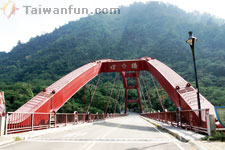
The Lilang Tribal Community is located in Heping District's Bo Ai village, by the intersection of the Dajia and Lilang rivers and the 26-km marker of the Central Cross-Island Highway after a right turn at the red Lilang Bridge, a new landmark along this road. The weather here tends to be comfortable and pleasant because of the geography, backed by a mountain and fronted by a river.
The Lilang area had a later development and still retains its original natural forest ecology with abundant wild animals and plants that can be observed, including Taiwan red pines, Taiwan incense cedars, Taiwan Phoebe, ephedra shrubs and other native plants. These, combined with plenty of insects, birds, frogs and butterflies, make this a heaven for hikers, nature lovers and photographers. In recent years, a cold springs has also been excavated around the Lilang River and become a popular tourist attraction.
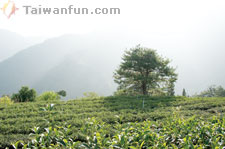
The Lilang forest path passes through Lilang community and heads toward the river's upper stretches via its meandering left bank and crosses a ridge line about 18 kilometers before merging with the Nantou Beigang River, for a total length of around 30 kilometers. With its rich forest ecological resources, this area is an alpine reservation area from the 4.5 to 6 km markers with less development after the 6 km marker. Along the way, the famous Eight Immortals Mountain Tea Garden is located at an elevation of 1,200 meters.
Dong Mao Mountain
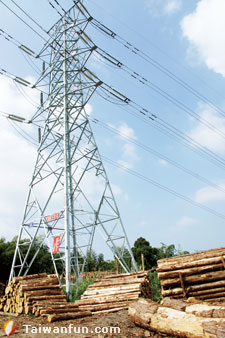
The Dong Mao Mountain trail is located north of the Dajia River with the front section following Taipower electrical lines and the back section built by the Forest Service and switch-backing up Dong Mao Mountain in a series of "Z" shaped turns. Dasyueshan has not been accessible for many years, assisting in successful wildlife restoration and gradually expanded its territory for human habitation. Near the Tianlun power station there's an artificial dam that has become an animal habitat where you can enjoy a closer view of wild Formosan rock monkeys and, if you are patient, watch and wait, it's not difficult to find groups of Taiwan blue magpies playing in the treetops.
A journey through the natural ecology of the Dajia River in this area provides a much deeper understanding and appreciation of Guguan that is no longer limited to hot springs. With the arrival of fall and winter, this is the perfect time to visit Guguan, slow down and relax in a hot springs, and savor nature's wonders along DongGuan Road for a truly unique, special journey and experience.
Getting there
By car:
Take Freeway No. 1 to Freeway No. 4 and head east toward Fengyuan. At the freeway's end, turn left toward Dongshi District and take Highway 3 and Highway 8 to Guguan.
Other transportation:
From the Taichung High Speed Rail (HSR) station, take Bus 153 or 153 'Fu'. From the Taiwan Railway's Fengyuan Station, take a bus from the station front to Guguan.
|

 December 2014