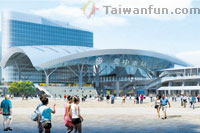
Model sketch of new Taichung
Train Station
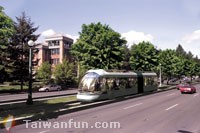
BRT in Oregon, USA
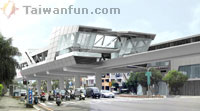
Model sketch of G12 Train
Station on the corner of
WenXin and WenXin South 5th
roads.
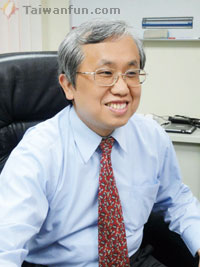
Taichung Transportation
Bureau
Director-General Lin
Liang-Tay
|
Taichung's Coming
Transportation Revolution
Words by Courtney Donovan Smith
Translated by Angel Pu
By the end of the decade Taichung is going to be a very different city. The iconic Taiwan Tower should be finished, the Metropolitan Opera House will be hosting international acts, the Taichung Gateway Project will completely change the large tract of land that used to be the Shuinan Airport and more and more skyscrapers will dot the landscape.
Most those changes will be more about how the city looks and less about how people go about their lives. By 2018, however, a parallel revolution will change how many move about the city.
The Mass Rapid Transit (MRT) Green Line is expected to be finished at the end of 2017, and was slated to run from the High Speed Rail station in Wuri to Dakeng, but plans have recently been announced to extend the line into Changhua city. Much of the line will run along WenXin Road and will be elevated, making it five times cheaper than running it underground. Architect renderings of the stations suggest they will be quite attractive.
The financial costs are a major factor in how the city decided to move forward. The original plan called for a series of MRT lines to be built, some underground--but the disastrous low usage rates and huge financial losses plaguing the Kaohsiung MRT made Taichung rethink its plans. Speaking to COMPASS, Taichung Transportation Bureau Director-General Lin Liang-Tay (交通局局長林良泰) laid out the city's plans, now centered on an integrated system that will offer an easy transportation option within short distance of most residents by 2017, unlike the Kaohsiung system. Instead of building an entire system of MRT trains, the city opted instead for building up a system of Bus Rapid Transit (BRT) lines, which they can ramp up quickly--allowing an easy-access and convenient complete system to be up and running to complement the MRT line. Not only can these BRT lines be built fairly quickly, but they are cheap. As Director-General Lin notes, for the price of the two Kaohsiung MRT lines, Taichung can build 50 BRT lines. A BRT system, like an MRT, has station platforms and payment is done before boarding. These will be located alongside dedicated BRT lanes. The buses themselves are elongated and articulated to allow large passenger volume. Aside from having dedicated lanes, traffic lights will be coordinated with their progress to keep speeds high. They plan to have busses come along at 1.5 to three minute intervals during peak periods.
The first BRT line to come online in early 2014 will be the Blue Line running along 'Taiwan Boulevard' (the renamed contiguous stretch of road from Taichung Train Station to the harbor, mostly what is TaiZhongGang Road). The station designs are inspired by the endangered Chinese White Dolphin. Initial pricing for a trip from Taichung main station to Providence University is pegged at NT$22 using an electronic ticket or NT$42 if paying in cash, with the trip taking the same amount of time as driving a car or taking a taxi--or about 45 minutes. The city says it will save citizens a lot of money, suggesting that a taxi for the same trip would cost between NT$380 and NT$480, or around NT$60 in petrol costs driving your own car. Director-General Lin says that by 2017 Taichung's BRT network will stretch 216 kilometers and be Asia's largest.
Complementing this system will be the Taiwan Railway's "MRT-style" light commuter rail system. The stretch of railway from near Wuri all the way to Fengyuan is going to be elevated with MRT-style stations. To make it even more MRT-like, new stations will be added, meaning there will be a station roughly every two kilometers along the elevated section. Below the elevated line where the tracks currently run will be parkway and bike lanes. They are also going to build a massive new Taichung Train Station, located about 125 meters from the old station and 10 times bigger. The old station will be turned into a museum and along with Stock 20 Art Gallery and the land between both will be integrated into a new 'Railway Culture Park'. Trains on this system are expected to be running in 2015, with the entire project expected to be finished a few years later.
Those bike lanes, along with the many the city has been adding around the city, are going to be complemented by a new city bike rental service slated to kick off in June next year and located at the sites of 20 key upcoming BRT and MRT stations, with a minimum of 20 bikes at each location. Plans are also underway to build two gondola or cable car systems. The first will originate near an MRT station in Dakeng and make a scenic 20 to 30 minute trip to Xinshe. The second is planned to run from Guguan to the top of Daxue Mountain, taking over one hour but certain to offer stunning views. Both are targeted to come online in 2018. The Tourism Bureau has also completed a study on reviving an Alishan-style narrow gauge railway that was abandoned 52 years ago, which would link the two gondola or cable car systems. A bike path would run alongside. They hope to have the project finished by 2018. So, if all goes according to plan, in 2018 someone could board an MRT in Taipei or Kaohsiung, transfer to the High Speed Rail, then continue on to the Taichung MRT, a gondola, a narrow-gauge train, another gondola and end up at the top of Daxue Mountain in the very center of the country. The tourism prospects are enormous.
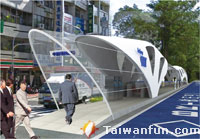 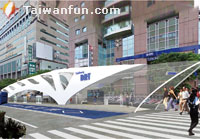
Left: Model sketch of BRT station on TaiZhongGang Road
(Taiwan Boulevard)
Right: Model sketch of BRT station near Splendor Hotel
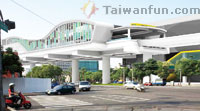 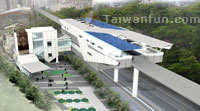
Left: Model sketch of G8 Train Station on the corner of
WenXin and HeNan roads.
Right: Model sketch of the G4 Train Station on BeiTun Road, close
to Jiushe Park.
|

 November 2012
