

 |
Little Southeast Asia in the heart of Taichung
Words and some photos by Vesper Stockwell
Translated by Naomi Lai
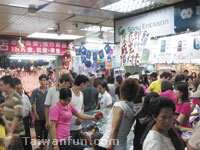
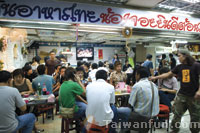
Along a small side street off of the First Square shopping complex, the row of shop signs are all in Indonesian, and the aroma of beef and fish curries mingles with the faint but unmistakable sticky-sweet smell of clove cigarettes. It's easy to forget that this is not Jakarta, but downtown Taichung. According to the Council of Labor Affairs statistics, there are around 370,000 foreign workers in Taiwan. On any given Sunday, head straight out of the Taichung train station, up ZhongZheng Road, and you will see many of the city's foreign workers-hailing predominantly from Vietnam, Thailand, Indonesia and the Philippines-hanging out at First Square's numerous restaurants and shops that sell authentic Southeast Asian fare and imported goods to meet demand. In a version of New York City's Chinatown and Little Italy, First Square and its surroundings might well be dubbed Taichung's 'Little Southeast Asia'.
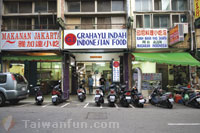 
Formerly First Market but renovated after a devastating fire in 1995, First Square is a 13-story building occupying nearly an entire block. In all its grimy glory, the building houses a second-run movie theater, food court, billiards, KTV parlors, discos, arcades, and basement parking. The ground floor's maze of vendors and small shops sell a typical hodgepodge of cheap mobile phones, camo-chic duds, synthetic hair extensions, and a million other products you never knew you needed. All this and more is crammed in between a tattoo parlor, custom suit tailor, and a manicurist applying glittering rhinestones one talon at a time. Because of the lower priced goods and entertainment, shopping at First Square has always appealed to local students. Over time, the area also became a leisure spot for foreign workers looking for a place to gather and enjoy their day off.
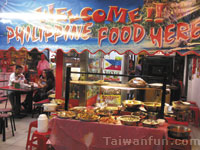
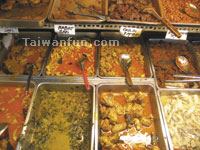
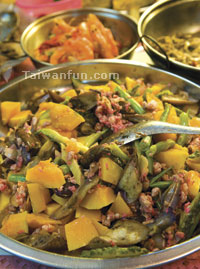
As with anybody who's ever traveled or lived abroad for an extended period of time, pangs of homesickness are easily transferred to cravings for food that comforts us. In the alleys weaving in and around First Square you'll find vendors selling home-style cooking, like the popular Filipino pinakbet which is made with bitter melon, eggplant, string beans and fermented shrimp fry. Indonesian buffets offer nasi goreng (Indonesian fried rice) and rendang (beef stewed in coconut milk and chili gravy).
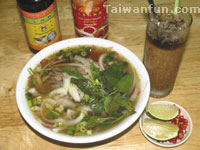
outhwatering desserts include klepon-sweet, glutinous rice balls that are dyed green from pandan paste, stuffed with palm sugar and sprinkled with coconut shavings. If you're more in the mood for Vietnamese, try Quan an Viet nam (越南美食) on 142, JiGuang Street ( tel. 0922-515-566). For NT$70, you can feast on a large bowl of pho bo (牛肉河粉), topped with plenty of fresh basil. Squeeze a little lime, chili and hoisin sauce into the mix and you have the deliciously complex taste of Vietnam's classic beef and noodle soup. On a hot day, it's perfectly paired with a tall glass of Vietnamese iced coffee, sweetened with condensed milk.
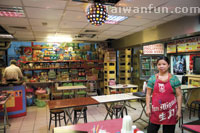
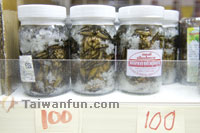
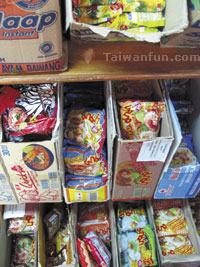
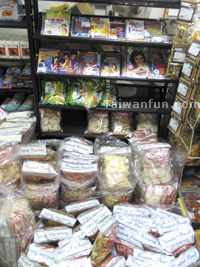
If you prefer to tackle these dishes in your own kitchen, a specialty food store on the third floor, open 11 a.m. to 10 p.m. daily, will likely carry the necessary ingredients. Strolling from one section to the next is like crossing international borders as you travel from Thai products to the aisles of all things Filipino. It's a good opportunity to stock up on paper-thin salad roll wrappers, crab and shrimp pastes, chili and fish sauce, and a variety of satay seasonings. The entire back row consists of numerous instant noodle brands, representing the distinct flavors of each country. In addition to coconut milk and palm sugar staples, there are some more obscure products like pickled catfish and jars of giant water beetles (only NT$100-come and get it!) that are worth perusing even if not eating. Intrepid cooks will appreciate kitchen accessories like a bamboo-woven basket to steam sticky rice in the traditional method, or a mortar and pestle to grind curry paste from scratch. Want to make Tom Yum soup at home but have a hard time finding all the ingredients in a local supermarket? Here, bundles of fresh galangal, kaffir lime leaves, chilies, and lemon grass are especially portioned and packaged for this quintessential Thai dish.
Wandering through the upstairs levels of First Square any day of the work week might leave you wondering how any of these shops stay in business. The dingy, florescent hallways are lined with shops who's metal doors have been rolled down, giving the impression they are bust or abandoned. When one is open, there may still only be a handful of customers scattered here and there. But come the weekend, especially Sunday, and the atmosphere is transformed-teeming with people, food and music. Still, like many of their patrons, business owners must often work multiple jobs to make ends meet. Originally from the Philippines, Rolly and his Taiwanese wife run a Vietnamese restaurant and KTV parlor on the third floor. Hands-on and upbeat, Rolly maintains his business while juggling two other jobs; he also works at an agency that helps bring Filipino workers to Taiwan, and performs six nights a week singing at a local establishment. When asked how he manages it all, he just smiles and says,"It's tiring, but you get used to it." With two chefs from Vietnam, Rolly's Quan an Vinh Ha Long is named after Ha Long Bay, a picturesque area renowned for its islands and dramatic limestone karsts in Quan an Vinh province along the northeast coast of Vietnam. After paging through the sticky songbook and deciding between five versions of "Endless Love", you can sing your heart out for a mere NT$10 a pop. With several of these coin-operated karaoke machines in one room and song selections in Filipino, Vietnamese, Chinese, and English, you not only have competing sounds, but also languages. Add to this the ubiquitous disco balls and flashing, year-round Christmas lights, and it's a bit of a sensory overload, but entertaining nonetheless.
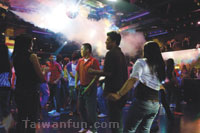
If dancing is more your thing, take the elevator up to the 12th floor and choose between a Filipino and Vietnamese disco. On the 6th floor, Planet Yugyugan, another Filipino disco-restaurant-karaoke combo, has a cover charge of NT$100 (free after 6:30 p.m.) and is open Sunday only from 1 p.m. to 8 p.m. Advertising Pinoy DJs, low-priced drinks, and free birthday cakes, Planet Yugyugan's large living-room style seating area allows patrons who aren't dancing to comfortably enjoy their beverages and meals. By 3 p.m. on Sunday afternoon, the spacious dance floor is packed and the music and laser lights are blazing. Anywhere else, this would qualify as a Friday night in full swing. "Many of of us work too much from Monday through Saturday and Sunday is our only day off," explains disco employee Hazel. "We open and close earlier so that people have a place to relax, dance, and have fun, but can still be ready for work early Monday morning."
Accommodating foreign workers' specific needs has lead to other by-products like an abundance of bargain international calling cards and services such as the EEC Index (怡樂國際有限公司) offering express delivery and money transfers to Indonesia. Convenient stores carry Bangkok newspapers, Indonesian Cosmopolitan magazines, comics, and CDs of music from all over Southeast Asia. Sundry household goods and beauty products like the Lulur body scrubs used in Bali are imported yet still very affordable. For Kiki, a young Taiwanese woman working in the health and spa industry, the Southeast Asian market was a place to find a uniquely fragrant shampoo she once bought while traveling in Thailand. "First Square is one of the few areas in Taichung where you can go to experience the exotic flavor of many countries and buy their goods at low costs," she says.
While certain areas of the building are particularly rundown and a little seedy, and while the potential for tension between racial groups can be intimidating for some, most people are there to genuinely just unwind and revel in their cultural reconnection. Throughout First Square's storys and neighboring streets, efforts of foreign workers to bring their cultures closer to their new home in Taichung have resulted in a concentration of authentic Southeast Asian food and entertainment. Fortunately, in Taichung's 'Little Southeast Asia', these can be enjoyed by anybody who's up for the adventure.
|

 September 2009
